

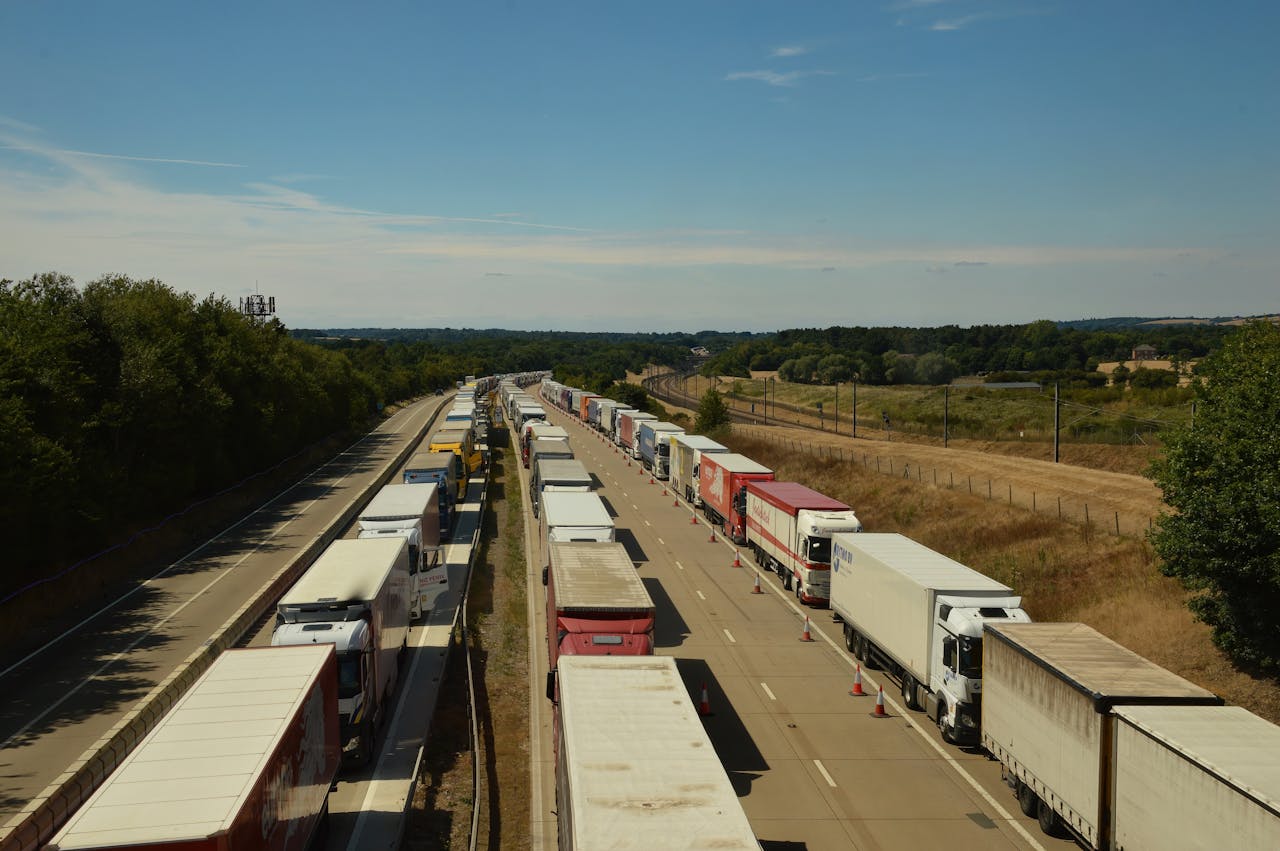
Have you ever tried to run a marathon with a missing shoe? I wouldn’t advise it. Despite pushing yourself to carry on, every step becomes harder and more painful than it should be. It’s a bit like the road freight industry at the moment! Shelves need stocking, factories require materials and customers want quick delivery. Yet, the number of drivers doesn’t match demand. No matter how hard you try to keep things moving, the gap between what businesses need and what you can realistically deliver is widening.
What’s the solution?
One big idea that keeps making headlines is the idea of autonomous trucks, presented to us as the way of the future. And we get it – vehicles don’t feel the tiredness of long hours on the road, but is it really the way forward, or is it just another idea that looks good on paper? Can autonomous trucks really ease the road freight driver shortage? Or once you lift the bonnet, is it slightly more complicated than it seems? Let’s explore…
What’s Causing the Driver Shortage?
The reasons aren’t new, but as anyone in the road freight industry will know, they’re becoming harder to ignore. It’s with no disrespect that we say one of the key concerns is an ageing workforce with fewer young people choosing road transport as a long-term career. The hours are long, driving is a lonely job, and the pressure to meet strict delivery slots isn’t easy.
It’s not cheap or easy to get into the industry either. The cost of licences is high, creating a financial barrier for many potential drivers before they even get behind the wheel. On average, in the UK, it costs up to £2000 for an HGV (heavy goods vehicle) class 1 licence or an HGV class 2 licence, and this can increase to over £4000 depending on the provider. On top of that, there’s a lot more medical expectations than ever before.
It’s no wonder the road freight industry is exploring alternative options.
What Are Autonomous Trucks and How Do They Work?
The Cambridge Dictionary defines the word autonomous as ‘independent and having the power to make your own decisions’. In terms of autonomous vehicles, they state ‘an autonomous machine or system is able to operate without being controlled directly by humans’.
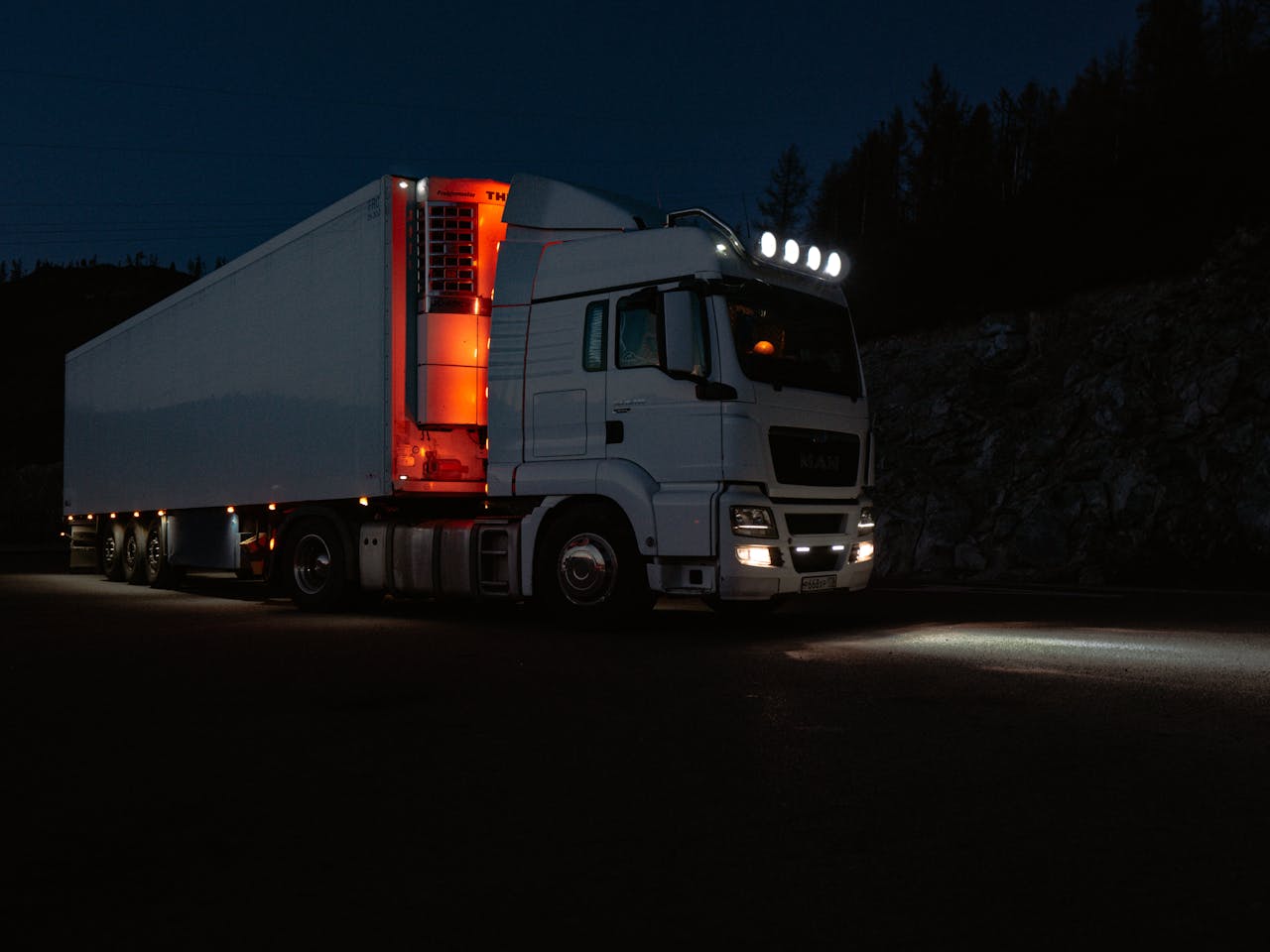
By using a combination of sensors, radar, LiDAR, cameras, GPS and onboard computer systems, autonomous trucks can monitor what’s going on around them and adjust to any hazards, speed limits and lane changes accordingly.
It’s not an all-or-nothing way of doing things, and it’s nothing new either; many of you probably drive cars with lower-level automation features such as driver and lane assist or cruise and speed control. However, when we’re discussing road freight automation, it’s the higher-level stuff that will allow trucks to be semi or fully autonomous with no need for human control.
Here’s the thing…
Autonomous truck technology isn’t just something that’s being talked about; it’s here, and it’s slowly and steadily developing. Across Europe, the US and parts of Asia, trials are already happening with autonomous vehicles handling long stretches of motorway while an actual human driver takes over for rural and city driving, reducing fatigue and ensuring safety on more tricky roads.
Could Autonomous Trucks Help Save Driver Shortages?
It’s hard to see how they can in the short-term, but long-term, there’s some hope…
There’s no denying that the use of autonomous trucks for road freight has its advantages, which include:
- Keeping things moving for longer.
- Less downtime.
- Improved efficiency.
- Support during high peak times.
They’re good for long-haul routes, overnight journeys and low-traffic areas, but with most autonomous trucks still requiring a human ‘safety driver’ behind the wheel, the industry still needs drivers. Whilst autonomous vehicles help ease some pressure off drivers, which may attract more people to the industry, it will not solve driver shortages immediately.
The Challenges and Limitations of Autonomous Trucks
For all the excitement surrounding the possibility of autonomous trucks revolutionising road freight, there are quite a few limitations:
- Safety – roads, pedestrians and other drivers are unpredictable, and while sensors can detect a lot of things, such as adverse weather, roadworks, unexpected hazards and human behaviour, it all makes it harder for technology to keep everything and everyone safe.
- Regulation – different countries, and sometimes different regions, have different views, standards and regulations on the use of autonomous vehicles. For example, discussions about its use are happening in the UK, but the legal framework to make deployment widespread isn’t in place yet.
- Infrastructure – some automation systems rely on clearly visible road markings and signage, a strong mobile network signal and regular charging points if the vehicle is electric. Just by driving through your local town, you’ll see that these aren’t always consistent.
- Cybersecurity – we’ve seen plenty of cyber-hacking in recent years. Between 1st July 2023 and 1st July 2024, there were 27 publicly reported cyber attacks on the transport and logistics industry. Hackers can access pretty much any system, despite developers’ best efforts, leaving sensitive, personal data at risk of misuse.
- Cost – autonomous trucks aren’t cheap, and if you’re operating a road freight fleet on a budget, they’re probably going to be out of your price range.
Impact on Jobs: Replacement or Reinvention?
The word autonomous, as we’ve previously covered, suggests there may be no need for human drivers, but it’s not that simple. Even the most advanced prototypes have proven they cannot handle city centres, complex manoeuvres, loading bay challenges or unexpected customer requirements without human input.
Why’s that?
Drivers do much more than just drive. They secure loads, assess situations, communicate with clients and quickly respond to the unexpected, and those human skills don’t just vanish as trucks become automated.
Instead, what we’ll most likely see is the role of the traditional truck driver changing in line with the automation of road freight. Technical knowledge of autonomous systems alongside driver skills will be required to take over the wheel when needed, or instead of single vehicles, a ‘transport operator’ could oversee a fleet of autonomous trucks, only stepping in remotely or in-person as required. Leading to more predictable working patterns and less time long-haul driving.
Who really knows what the future holds for road freight, but at Millennium Cargo, we know that strong relationships, reliable communication and human expertise will always be at the forefront of good logistics.
What This Means for Freight Forwarders and Their Clients
Short Term
Freight forwarders aren’t likely to see any drastic changes to day-to-day operations. Although autonomous truck technology is progressing, wide-scale use is still far off.
Medium-Term
Hybrid models may be commonplace, with autonomous systems handling long, repetitive stretches of road, then a skilled driver takes over the trickier parts of the journey.
Long-Term
As road freight technology settles, matures and develops, autonomous trucking could offer more reliable delivery windows at potentially lower costs.
The Road Ahead for Autonomous Freight
Autonomous trucks may help with driver shortages in the long run, but they’re not a quick fix and won’t replace the human skills needed to keep things moving.
The future of road freight looks likely to be one of technology supporting drivers, not replacing them.
To explore how the future of freight could help shape your business for success, speak to us at Millennium Cargo. With decades of freight forwarding experience and a team that cares, we’ve got the skills needed to help you adapt and keep your cargo on track.